What Makes a Tea and Coffee Vending Machine Suitable for Large-Scale Workplaces?
In a large workplace, providing tea and coffee involves more than making refreshments available. Businesses must cater to different employee preferences, handle high demand, maintain hygiene, and ensure beverages are accessible throughout the working day.
Introduction
In a large workplace, providing tea and coffee involves more than making refreshments available. Businesses must cater to different employee preferences, handle high demand, maintain hygiene, and ensure beverages are accessible throughout the working day. When hundreds of employees share the same refreshment facilities, slow preparation and long queues can disrupt their daily routines.
This is where choosing the right tea and coffee vending machine becomes important. A machine designed for large-scale workplaces should deliver consistent beverages, dispense drinks quickly, and allow easy cleaning and maintenance.
However, not all machines are suited for handling the rigors associated with an active corporate office, manufacturing plant, or business premises. Factors such as capacity, dispensing rate, storage space, ease of cleaning, and maintenance services will all play a role in determining how well the machine suits the needs of the business.
Understanding these factors helps businesses select equipment that supports employees' refreshment needs without creating unnecessary delays or operational difficulties.
1. High Daily Brewing Capacity
One of the factors to think about for big business offices is how many cups a machine can produce per day. An office machine that can handle a few people may have difficulty with hundreds of workers using it during a break.
High-capacity commercial tea and coffee vending machines are designed to handle frequent beverage preparation and meet the demands of busy workplace environments.
Consider an office with 300 employees, many of whom prefer tea or coffee during morning and afternoon breaks. The machine must be capable of handling this concentrated demand without causing long queues.
When calculating capacity, companies should think about:
- •The total number of employees using the facility.
- •Average cups consumed per employee.
- •Peak demand during scheduled breaks.
- •Number of working shifts.
- •Daily intake of beverages expected.
Choosing a machine based on estimated daily consumption, rather than employee count alone, helps reduce waiting times during peak hours.
2. Multiple Beverage Options for Different Preferences
In a large organization, employees are likely to have different beverage preferences. While some employees may prefer strong filter coffee, others may choose tea, milk-based coffee, or flavoured beverages.
Having several choices on the machine would make the facility more user-friendly.
Why beverage variety matters
A machine that offers multiple beverage options can reduce the need for separate dispensing equipment while making better use of available cafeteria space.
Depending on the model, useful features may include:
- •Separate tea and coffee selections.
- •Fresh milk dispensing.
- •Multiple beverage combinations.
- •Hot water availability.
- •Adjustable beverage quantities.
For workplaces with diverse beverage preferences, machines offering multiple selections can provide a more convenient solution.
Additionally, businesses need to find out whether the dispensing systems prepare the drinks automatically or they have to be prepared manually. This can have an impact especially when business is hectic.
3. Consistent Taste and Beverage Quality
In employee cafeterias, consistent beverage quality is just as important as availability. A cup of coffee prepared early in the morning should provide the same taste and quality of the one that is prepared later in the day.
Variations in ingredient measurements, water temperature, and dispensing quantities can affect the taste and quality of beverages.
Commercial beverage machines ensure that certain steps in the process can be standardized. They may control the portions and temperatures, and ease the process of dispensing the beverages.
The importance of ingredient quality
This equipment is one of the factors that determine the preparation of the drink. The other factor is the ingredients used in the preparation of the drink.
Businesses should consider:
- •Quality of tea leaves and coffee powder.
- •Suitable ingredient proportions.
- •Proper storage conditions.
- •Fresh milk handling, where applicable.
- •Regular replenishment of consumables.
Using quality tea and coffee ingredients and maintaining proper storage conditions also help businesses achieve consistent beverage quality.
4. Durable Construction for Continuous Usage
Large workplaces such as factories, IT firms, hospitals, and other industries often require machines that can operate reliably across different shifts. This means that the equipment should be able to stand tough on a day-to-day basis.
A suitable commercial machine should have durable components, an efficient heating system, and a sturdy body that can withstand regular use in demanding workplace environments. It would be advisable to consider stainless steel equipment for this reason.
Before selecting equipment, businesses should examine:
- •Overall construction quality.
- •Tank capacity and material.
- •Heating system performance.
- •Dispensing mechanism.
- •Ease of accessing internal components.
- •Availability of replacement parts.
The appropriate choice will depend on the anticipated workload and operating environment. For instance, a device that is meant to be used sparingly may not be appropriate for use in an establishment that caters to workers during the whole day.
5. Easy Operation and Quick Dispensing
Convenience becomes particularly crucial when multiple employees have to take refreshments at once.
A complex dispensing system can lead to queues as well as an extended period for which employees stay away from their normal duties. An easy-to-use interface makes it easy for all kinds of users.
Today's vending machines can have push-button operations, touch screens, labeled beverages, and automated portioning. These features enable employees to choose their drinks without help from the cafeteria workers.
Features that improve everyday convenience
A workplace should look for:
- •Clearly displayed beverage selections.
- •Simple dispensing controls.
- •Quick preparation cycles.
- •Easy-to-understand operating instructions.
- •Automatic quantity control, where available.
Organizations that have many departments or big cafeterias will find ease of use to be a great advantage.
6. Hygiene and Easy Maintenance
Hygiene should never be overlooked when selecting equipment used by a large number of people.
Continuous dispensing requires continuous cleaning, checking, and refilling. Some areas that need special attention include dispensing areas, milk tanks, ingredient bins, and collection trays.
A good cleaning program will help to avoid accumulation of residues and will facilitate production of beverages with high quality. Equipment that is capable of removal or self-cleaning will make routine maintenance easier but will not exclude the necessity of continuous inspection and cleaning.
The following maintenance programs should be developed by businesses:
- •Daily cleaning of dispensing areas.
- •Regular inspection of tanks and internal components.
- •Timely replacement of consumables.
- •Cleaning of milk-handling components.
- •Periodic servicing by trained technicians.
A stable system of maintenance is especially necessary at work environments where the beverage machines operate continuously during the day.
7. Energy Efficiency and Operational Requirements
Energy efficiency plays a role in the total energy consumption of a workplace since a machine will use energy throughout the day.
Therefore, when making a choice, the business must look at the power consumption rating, heating needs, usage time and stand-by settings of the machine.
But choosing the machine with the least power rating might not be the best decision because the machine must have enough capacity for the number of servings to be made. There must be a balance between energy usage and performance per day.
The business must also take into consideration the space on the countertop, electricity, ventilation, water supply and maintenance of the machine.
8. Reliable After-Sales Service and Technical Support
A well-made machine also needs maintenance over time. The parts may need servicing, the dispensing mechanisms may need calibration, and the supplies have to be topped up from time to time.
In case of a large corporation, any failure of the machinery will disrupt the refreshment facilities of several hundred employees. This is why after sales service forms an integral part of the buying decision process.
Companies need to assess the service provider based on:
- •Availability of trained technicians.
- •Preventive maintenance arrangements.
- •Response time for service requests.
- •Spare parts availability.
- •Annual Maintenance Contract options.
- •Support for multiple workplace locations.
A dependable service arrangement helps businesses manage equipment performance without placing the entire maintenance responsibility on their internal teams.
KofeeTek provides workplace beverage equipment along with maintenance and technical support options for businesses. Organizations can evaluate their machine rental schemes to know the service packages available.
Choosing the Right Machine for Your Workforce
No one machine would be appropriate for all big workplaces since the selection depends on the number of users, consumption per day, types of beverages, space available, and operating hours.
A workplace with 100 users will definitely need different specifications than an industry where there are 500 users working in three shifts. The selection of machines should be done according to actual capacities and features rather than just the number of functions offered.
KofeeTek offers a range of commercial beverage machines designed to meet different workplace requirements. Depending on the expected daily consumption and beverage preferences, businesses can consider the following models:
- •KT Coffee Brewer: A filter coffee machine with a stated capacity of 300 cups per day, suitable for workplaces that primarily serve filter coffee.
- •KT BrewOne with Milk Boiler: A coffee and fresh milk system with a dual-tank setup and a stated capacity of 400 cups per day.
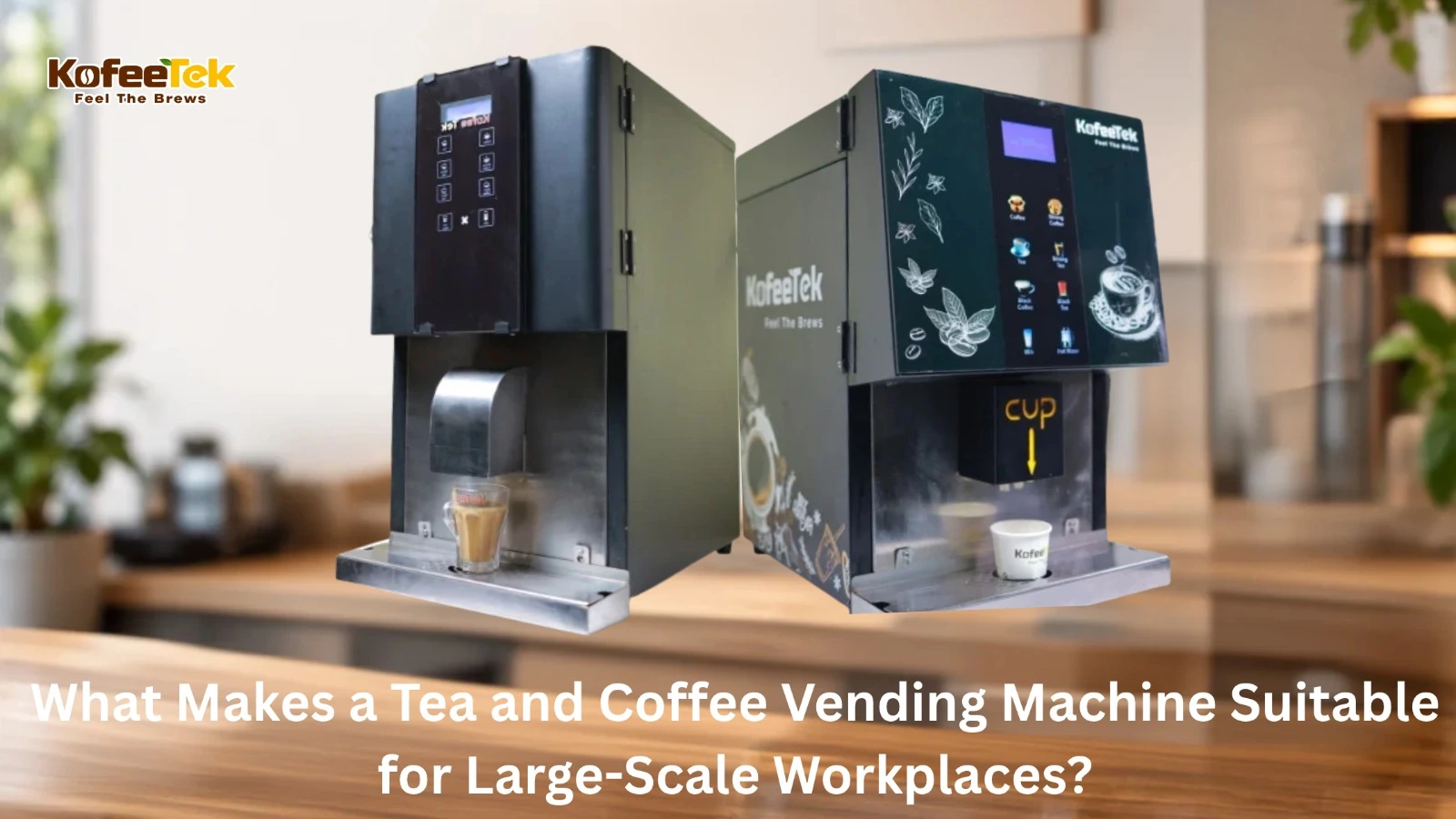
- •KT 3-in-1 COMBO: A machine that dispenses coffee, tea, and milk through a triple-tank system, with a stated capacity of 600 cups per day.
- •KT Trio Brew Plus: A three-tank commercial brewer with a stated capacity of 800 cups per day, designed for higher beverage demand.
- •KT FreshMilk Pro 8: A fresh milk beverage machine offering eight selections and a stated capacity of 500 cups per day.
These models provide different capacity and beverage options for businesses to compare. The final selection should account for peak-hour demand, operating schedules, available space, and the manufacturer's recommended usage.
Businesses have an opportunity to evaluate the full range of commercial vending machines prior to choosing the right one.
Conclusion
Choosing a proper beverage system for an organization is not as simple as comparing the price of machines or comparing numbers of selection choices. Factors like daily capacity, quality of drinks, durability, efficiency of dispensing, hygiene, energy usage, and machine maintenance affect the performance of the system.
An appropriate Tea and Coffee Vending Machine will make the management of refreshment stations easier for employers and at the same time make drinks easily accessible for employees.
To make an appropriate decision, it is important to consider the size of the staff in the organization and the consumption pattern. This will make it possible to compare the needs of the business with the capabilities of the machine.
Businesses looking for a suitable workplace beverage solution can contact the KofeeTek team to discuss their requirements and identify the right commercial vending machine.
Frequently Asked Questions
A commercial vending machine with sufficient daily brewing capacity, multiple beverage options, durable construction, and easy dispensing controls is suitable for a large office. The right model depends on employee count and expected daily consumption.
The required capacity depends on the number of employees, average beverage consumption, peak break times, and working shifts. Businesses should estimate daily demand before selecting a machine.
Yes. Certain commercial vending machines offer both tea and coffee options, along with other beverages. Multi-selection and multi-tank models allow employees to choose from different drinks using a single machine.
A multiple-tank system allows different beverages or ingredients to be stored separately, depending on the machine design. This makes it easier to offer multiple drink options without repeatedly changing the contents of a single tank.
Dispensing areas and removable components should be cleaned regularly, with daily cleaning where required. Internal components, tanks, and milk-handling systems should be maintained according to the manufacturer's cleaning instructions.
Businesses should check for preventive maintenance, trained technician support, spare parts availability, breakdown assistance, and Annual Maintenance Contract options.
Renting can be suitable for businesses that prefer a service-supported arrangement instead of purchasing equipment outright. Before selecting a rental plan, review the monthly charges, billing conditions, maintenance coverage, and contract terms.
Businesses should evaluate daily brewing capacity, beverage options, construction quality, power requirements, cleaning needs, installation conditions, and after-sales support before making a decision.